Local history
The story of Boca Raton
A coastal city shaped by Indigenous history, railroads, architecture, aviation, education and conservation.
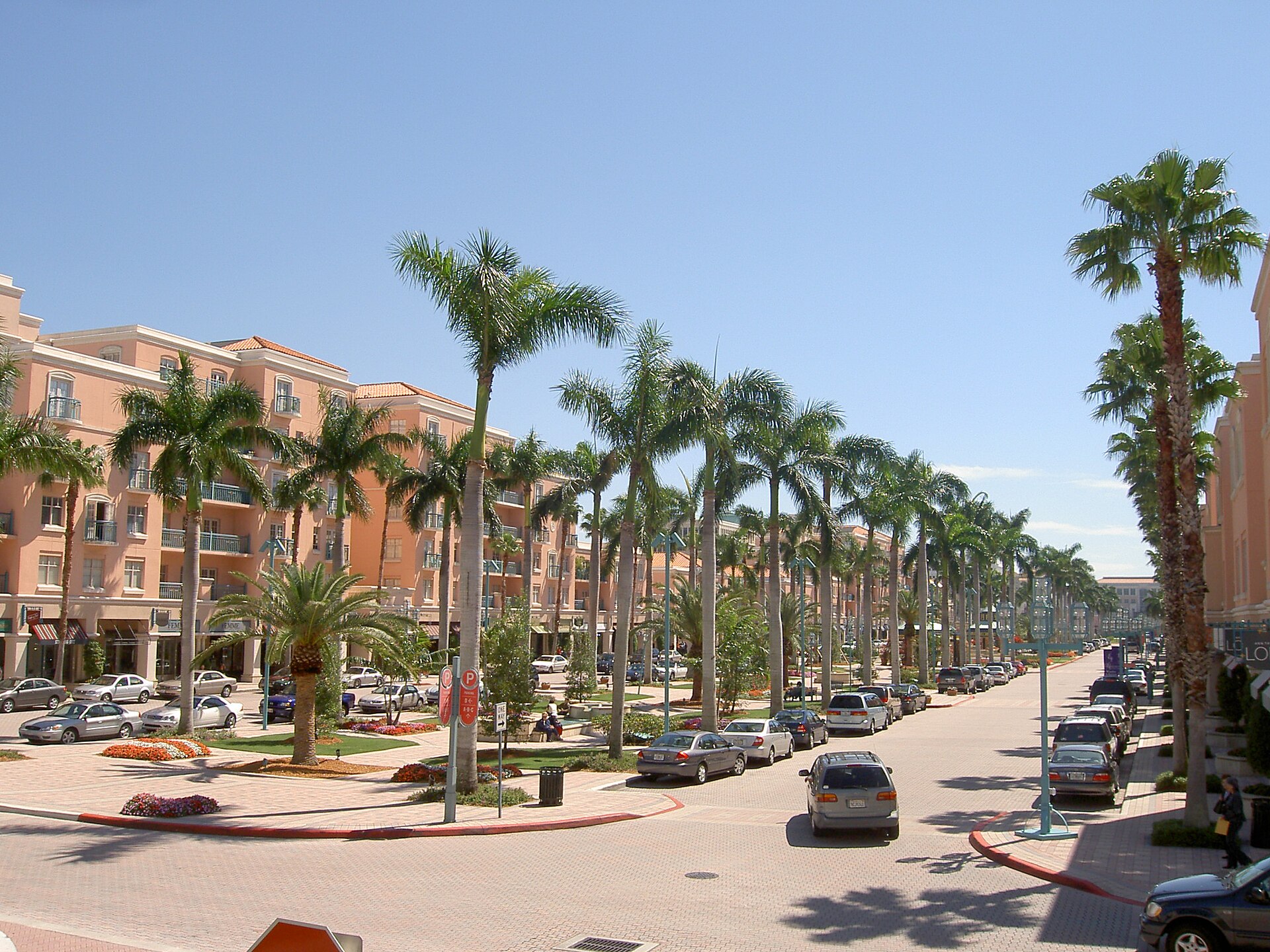
Mizner Park. Photo: Wikimedia Commons.
Before European settlement
Tequesta homeland
The Boca Raton area formed part of the homeland of the Tequesta people, whose communities lived across southeastern Florida and relied on the region's coastal waters, wetlands and hammocks.
1895–1924
A small farming community
The Florida East Coast Railway reached the area in the 1890s. Early settlers cultivated pineapples, tomatoes and other crops, and the settlement appeared as Boca Ratone before the modern spelling became standard.
1925–1929
Addison Mizner's vision
Architect Addison Mizner proposed an ambitious resort city inspired by Mediterranean and Spanish architecture. The boom collapsed, but Mizner's visual language permanently shaped Boca Raton's identity.
1942–1947
Wartime airfield
The Boca Raton Army Air Field trained radar personnel during World War II. Its land later helped establish Florida Atlantic University and became central to the city's postwar growth.
1950s–1980s
Growth, preservation and culture
Boca Raton expanded rapidly while residents organized to preserve beaches and natural areas. Institutions including the Boca Raton Historical Society, Gumbo Limbo Nature Center and Boca Raton Museum of Art deepened civic life.
1990s–today
A connected coastal city
Downtown redevelopment, Mizner Park, Florida Atlantic University and expanding arts, research and business communities have made Boca Raton a distinctive Atlantic-coast city.
Explore the record
Where to learn more
Visit the Schmidt Boca Raton History Museum in historic Town Hall, explore the Boca Raton Historical Society archives, and follow the city's historic-site markers.
Boca Raton Historical Society